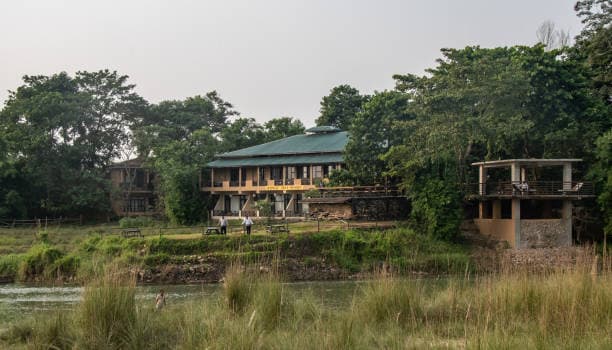
Turn your Chitwan vacation trip into an unforgettable journey by choosing a resort that connects you directly with nature. Look past shiny photos and compare what truly shapes your stay: a comprehensive safari package, skilled naturalists, ethical wildlife tours, spacious private villas for mid-day downtime, peaceful riverfront settings, and quiet locations away from crowded tourist streets.
Choosing a wildlife resort near Chitwan National Park is different from booking an ordinary hotel.
In Kathmandu or Pokhara, you might compare the room, location, breakfast, price, and online reviews. In Chitwan, those things tell only part of the story.
Here, your resort choice can shape how you enter the jungle, when your safari begins, who guides you, how much time you spend traveling between activities, and what you experience when the safari vehicle stops for the day.
A Chitwan jungle safari is not a scheduled wildlife show. A greater one-horned rhino may step from the grass beside a river. A herd of deer may suddenly freeze after hearing an alarm call.
You may see langurs high in the trees, crocodiles resting along the riverbank, or dozens of birds before breakfast. A Bengal tiger may leave tracks across the road without ever showing itself.
So, before searching for the best resort in Chitwan, ask a better question: What kind of Chitwan experience do you actually want?
The answer will help you choose a wildlife stay that matches your budget, travel style, family needs, and expectations.
I. Start With the Experience, Not the Star Rating
When comparing Chitwan hotels and resorts, look beyond polished room photographs. The best jungle safari resort connects accommodation with the destination.
Ask how close the property feels to the natural landscape.
Find out where its safari activities begin.
Check whether the resort uses experienced naturalists.
Learn whether you can spend quiet time by the river, in the gardens, on a private balcony, or simply listening to the jungle after dark.
Ideally, your entire stay should remind you that you are beside one of South Asia's important protected ecosystems. You should not feel as if you stayed in a normal hotel and occasionally left for wildlife activities.
Luxury here isn't just expensive furniture. It is about access, space, knowledge, time, and connection with nature.
II. Location Can Completely Change Your Chitwan Experience
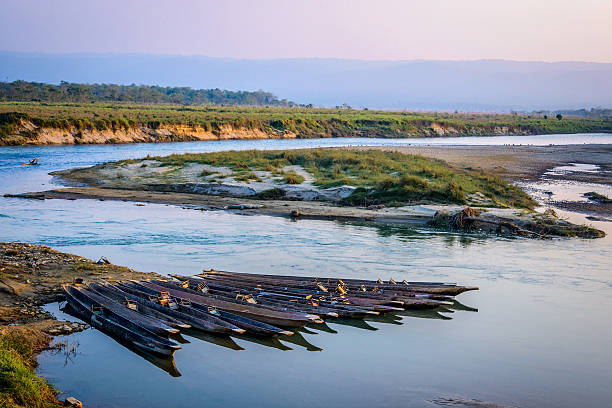
One of the most important decisions when visiting Chitwan National Park is where you stay around the World Heritage site.
A riverfront, buffer-zone forest, open landscape, village, tourist street, or highway-facing hotel can all offer very different stays, even when they appear close together on a map.
Many first-time visitors automatically search for Sauraha Chitwan National Park because Sauraha is the region's best-known tourism center.
It offers a wide choice of Chitwan hotels, restaurants, shops, tour offices, and riverfront areas.
That makes Sauraha convenient for walks around shops and markets. Still, if you’re here for quiet mornings, long river views, private gardens, wildlife sounds, and evenings without busy tourist streets, you may prefer a quiet alternative to Sauraha—Meghauli and Amaltari.
Meghauli and Amaltari sit near the western entrance of Chitwan National Park, along the Rapti and Narayani rivers, and are well known for wildlife viewing, birdwatching, river scenery, and Tharu culture.
A nature retreat near Chitwan National Park in one of these quieter locations may suit couples, families, photographers, birdwatchers, and international travelers who want the resort itself to become part of the holiday.
III. Look Carefully at the Safari Program
If wildlife is one of your main reasons for traveling to Chitwan, the safari program deserves as much attention as your room.
A genuine Chitwan safari resort should clearly explain the experiences and adventure packages it offers.
Jeep drives remain one of the main ways to explore the park safely.
Canoe or boat trips introduce you to the river ecosystem and endangered aquatic fauna.
Guided walks and birdwatching can reveal details you would easily miss from a vehicle.
Cultural experiences can also help you understand the communities that have lived beside these forests for generations.
But the package name alone tells you very little. Two resorts may both advertise a jungle safari in Chitwan, yet provide very different experiences.
One may send you on a short, crowded excursion with limited interpretation. Another may use experienced naturalists who understand animal tracks, alarm calls, habitat, bird behavior, and seasonal wildlife movements.
For instance, the 3N4D jungle safari package by Temple Tiger Jungle Resort lets you feed elephants and watch a riverside Tharu show on Day 1; track tigers, birdwatch, and dine by a bonfire on Day 2; canoe past gharials and mugger crocodiles, pool swim, and have a cultural dinner on Day 3; and depart with a delicious beach breakfast on Day 4.
When comparing Chitwan safari resort packages, ask who leads the safari, how long the excursion typically lasts, whether transportation is shared or private, which park entrance the resort generally uses, and whether activities change with weather or season.
IV. Keep Your Wildlife Expectations Realistic
Chitwan is famous for wildlife, but responsible travel starts with one thing: Wild animals don't follow itineraries.
The one-horned rhino in Chitwan is one of the park's signature species, and UNESCO also identifies the park as important habitat for both the greater one-horned rhinoceros and Bengal tiger.
But even in a wildlife-rich landscape, no resort can promise you a specific sighting.
Similarly, the Bengal tiger in Nepal is especially elusive. You might see pugmarks, hear an alarm call, or notice where a tiger has marked its territory without ever seeing the animal itself.
Nevertheless, that doesn't mean the safari failed.
A strong tiger safari in Chitwan teaches you to appreciate the entire ecosystem instead of measuring the day by one photograph.
Chitwan also offers deer, langurs, wild boar, gaur, sloth bears, reptiles, and an extraordinary bird population.
Along the waterways, you may encounter the endangered gharial and the Chitwan mugger crocodile. Early mornings can be particularly rewarding if you are interested in the birds of Chitwan National Park.
Choose a resort that talks honestly about wildlife and wild encounters.
V. Choose Accommodation That Fits How You Actually Travel
After a five-hour wildlife outing, your room quality suddenly matters much more.
And this is where travelers most often make the wrong comparison.
They choose the cheapest room because they expect to spend all day outside, then discover that Chitwan naturally includes downtime. Remember,
The hotter part of the afternoon may be better spent resting.
Families may need a break between activities.
Couples may want privacy after a morning safari.
Photographers may spend time sorting images or need particular hours for better photographs.
Long-haul travelers may simply need a quiet afternoon after several busy days in Nepal.
A jungle villa resort in Chitwan can be especially appealing when the room opens toward gardens, forest, river scenery, or open countryside.
However, if comfort and privacy matter, a Chitwan resort with private villas can offer more space and separation than a standard hotel building.
With a private balcony, you can have morning coffee outside, read between excursions, watch birds, or enjoy the evening without leaving your villa.
That is why searches such as "Chitwan resort with balcony jungle view" and "luxury villa stay in Chitwan National Park" reflect something deeper than room design.
Travelers increasingly want accommodation that feels connected to the destination.
VI. Think About the Resort Between Safaris
Safari activities may be the highlight of a Chitwan vacation, but they won't fill every hour.
Your resort should still feel enjoyable when you are not in the park, which is especially important for families.
A family-friendly resort in Chitwan with a kids' pool, gardens, open spaces, comfortable dining, and flexible activity schedules can make the difference between a tiring family trip and an enjoyable one.
The same principle applies to couples and groups.
A Chitwan resort with a swimming pool and bonfire gives you another way to enjoy the destination. You might return from the jungle, relax in the afternoon, and later sit outdoors as the temperature drops.
These quieter moments often become part of the memory.
Therefore, before finalizing a stay, ask yourself what you would enjoy doing if the weather canceled your afternoon safari.
VII. Understand What Your Chitwan Package Actually Includes
Packages can make safari travel easier, but only when you understand what you are buying.
A Chitwan 2-night, 3-day package is a common starting point for first-time visitors. The Nepal Tourism Board describes a typical two-night, three-day jungle visit as combining wildlife safari activities, canoeing, nature experiences, and exposure to Tharu community life.
You might arrive and enjoy a river sunset on the first day, take a safari the next morning, explore another activity later, and still have time for birdwatching before you leave.
But do not compare packages only by price.
One Chitwan tour package may include meals, transfers, park activities, guides, and accommodation. In contrast, another may advertise a low room rate and charge separately for almost everything you actually came to Chitwan to do.
Before booking and paying in advance, check accommodation, meals, safari vehicle arrangements, park permits, transfers, canoe trips, naturalist services, cultural programs, taxes, and other activity costs.
A slightly more expensive Chitwan safari resort package can offer better value if it removes hidden extras and gives you a stronger overall experience.
VIII. Consider the Season Before You Book
For many visitors, October through March is the easiest time to explore Chitwan, Nepal.
Autumn and winter are the main seasons, with average temperatures around 25°C. April through June gets much hotter, reaching around 43°C, while July through September brings the rainy season.
That makes winter safari travel particularly attractive if you prefer cooler mornings and more comfortable outdoor activities.
But each season has its character.
Animals and birds rest during the hotter summer days, so daytime sightings are rare. Rain transforms the landscape, filling it with greenery, but affects many wildlife activities.
If you are researching phrases such as "travel safari national park winter," the key lesson isn't simply that winter is good. The season should influence your resort choice.
In warmer months, air-conditioning, shaded spaces, and a swimming pool matter more. During cooler months, sunny balconies, outdoor dining, and evening bonfires can add more to your stay.
Ask the resort what activities run during your travel dates, rather than assuming every program operates the same way year-round.
IX. Pay Attention to Wildlife Ethics
Wildlife tourism should protect the animals that make the destination worth visiting, especially when researching Chitwan elephant activities or an elephant safari.
Do not judge an animal experience from a photograph alone.
Ask how the elephants are housed, handled, what role mahouts play, what educational information guests receive, and what welfare practices the property follows.
The same principle applies to all wildlife encounters.
A successful wildlife resort in Nepal should maintain a respectful distance from animals, follow park regulations, avoid disturbing wildlife for photographs, and prioritize wildlife well-being over guest entertainment.
Responsible tourism is not an extra luxury. In a protected landscape, it should be part of the experience.
X. Look Beyond Wildlife and Learn About Chitwan's Communities
Chitwan is not an empty wilderness. People have lived around this reserved forest for generations, long before it became a protected area.
The Tharu community is central to the region's cultural identity, and the Nepal Tourism Board highlights Tharu culture as a major experience for visitors.
A thoughtful visit to a Tharu village can add context that a wildlife drive cannot.
You learn how local homes are designed for the Terai climate, how communities relate to the surrounding landscape, how food traditions developed, and why conservation also depends on the people living near protected areas.
You can even search for a Tharu community lodge, jungle resort, or larger property. But look for signs that local communities participate meaningfully in tourism through employment, guiding, food production, crafts, cultural interpretation, or community projects.
Temple Tiger Jungle Resort: The Perfect Adventure + Serene Resort
Temple Tiger Jungle Resort offers a useful example of how these different factors can come together.
The resort sits in Amaltari in the western sector of the Chitwan landscape, on the banks of the Narayani River, with about a thirty-minute boat journey from the wild heart of Chitwan National Park.
For travelers seeking a quiet alternative to Sauraha, Temple Tiger offers a different atmosphere, with melodious mornings, peaceful afternoons, and breezy evenings.
Temple Tiger currently has twenty solar-powered villas. Each includes a private balcony, air conditioning, local design details, and about 650 square feet of space, with capacity for two adults and a child.
But accommodation is only one part of the experience.
The resort offers open-top 4WD jungle safaris with naturalists, traditional canoe experiences on the Narayani River, birdwatching, and elephant briefing and feeding on its premises.
Its riverside setting also creates opportunities to observe birdlife and the great amber dip without spending every hour inside a safari vehicle.
In addition, Temple Tiger uses vegetables from its own organic farm in its dining program, mixing local seasonings and spices, with meals served around spaces such as its lakeside terrace and bar.
For a traveler seeking a safari resort in Nepal, these details matter because they show how room design, location, local employment, wildlife activities, river access, and sustainability can work together rather than exist as separate selling points.
Before You Book, Ask the Questions That Matter
A beautiful website can inspire your trip, but a few direct questions can help you avoid the wrong stay.
Before confirming any Chitwan resort, check:
Which park entrance and safari areas does the resort normally use, and how long does it take to reach them?
Does the property provide naturalists, and what safari, canoe, birdwatching, and cultural activities does the package include?
Does your chosen room offer air conditioning, a private balcony, enough space for a family, or other features you actually need?
What meals, transfers, permits, safari costs, taxes, and activities are included in the quoted rate?
How does the property handle wildlife encounters, elephant welfare, local employment, waste, water, and environmental impact?
What activities can you enjoy at the resort when you are not on safari?
These questions reveal far more than a star rating.
Bottom Line
Choose the resort that lets you experience Chitwan as wild and serene as it is—not just sleep near it.
The right Chitwan resort should connect you with the forest, rivers, animals, birds, communities, and slower rhythm that make Chitwan different from every other stop in Nepal.
Furthermore, if your idea of a Nepal safari in Chitwan National Park includes private villas, Narayani River scenery, experienced naturalists, jeep safaris, canoe journeys, birdwatching, local culture, and a quieter western setting, Temple Tiger Jungle Resort offers a compelling base for exploring it.
Click here to call quickly or make a reservation.


